• Healthcare spaces must heal beyond medicine
• Infrastructure must anticipate the future
• Homes must reflect identity and belonging
• Educational environments must enable growth and curiosity
Every project is an opportunity to create impact — not just through design, but through the lives it
touches.
Amol Langer with more than 16 years of experience, is a designer driven by curiosity, empathy, and a deep belief in the transformative power of space. Her approach to architecture is rooted in exploring diverse paradigms of creativity — blending context, culture, and human behavior to craft environments that are not only functional but deeply meaningful.
Her work is guided by a simple yet profound philosophy: spaces are not just built forms, but lived experiences that shape emotions, influence well-being, and define how people connect with each other and their surroundings. This sensitivity to the human condition is at the core of her design process, allowing her to create environments that resonate with identity, aspiration, and purpose.
Amol’s journey reflects a rare confluence of design thinking, social impact, and global exposure. She was recognized among the top 25 budding women entrepreneurs of India by the Cherie Blair Foundation for Women — a testament to her ability to translate design into meaningful entrepreneurial impact. As a delegate at the Global Entrepreneurship Summit 2017, she represented India among innovators from over 170 countries, engaging with global leaders to foster ideas around innovation-led growth.
Her international engagements have significantly shaped her perspective on sustainable and resilient development. Through the South East Asia Leadership Program, she collaborated with leaders from the United Nations and multiple countries to develop strategies aligned with SDG 3 (Good Health & Well-being) and SDG 11 (Sustainable Cities & Communities). Her work with mayors of tsunami-affected districts in Japan further deepened her understanding of climate-responsive planning and the importance of resilience in shaping future cities.
At Inkkya Collaborative, Amol leads with a vision to create spaces that go beyond aesthetics — spaces that embody stories, enable well-being, and respond thoughtfully to their social and environmental context.Her work continues to push the boundaries of how architecture can be more inclusive, sustainable, and deeply human.
Shivank Sharma is a healthcare architect with over 17 years of experience in delivering complex, high-acuity medical infrastructure — shaping institutions that demand precision, resilience, and uncompromising performance. His work operates at the intersection of clinical planning, engineering systems, and execution strategy, enabling healthcare environments that are not only compliant, but deeply efficient and future-ready.
His professional foundation is strengthened by his tenure in a senior leadership role at Postgraduate Institute of Medical Education and Research — one of India’s largest and most intricate healthcare ecosystems. Within this high-pressure, continuously operational environment, Shivank led the planning, coordination, and execution of critical healthcare infrastructure, including 800+ bedded tertiary care facilities, modular operation theatre complexes, neurosciences centers, mother-and-child hospitals, emergency and trauma units, and complex live-campus retrofits without disruption to ongoing services.
This experience has equipped him with a rare ability to navigate the realities of building within active clinical environments — balancing infection control, patient flow, engineering constraints, and operational continuity with design intent. His work reflects a deep understanding of how healthcare systems function in practice, not just in theory.
Shivank’s portfolio includes some of India’s most advanced sustainable healthcare projects, including the country’s first IGBC Platinum-rated public sector hospital and multiple GRIHA 5-Star developments. His approach to sustainability is performance-driven — integrating energy efficiency, environmental responsibility, and lifecycle thinking into the core of healthcare infrastructure.
At Inkkya Collaborative, Shivank leads healthcare and infrastructure strategy with a focus on delivering institutions that perform seamlessly — clinically, operationally, and technically. His work is driven by the belief that healthcare architecture must go beyond buildings; it must enable better care, support medical excellence, and adapt to the evolving demands of public health.
He brings a rare combination of technical depth, on-ground execution experience, and strategic foresight— positioning Inkkya Collaborative as a practice capable of delivering healthcare environments at the highest level of complexity and impact.
Our work is strengthened by the guidance of industry stalwarts such as Ar. Hussian Varawala, a leading voice in healthcare design with over four decades of experience, and Ar. Rajiv Bansal, the first healthcare architect of PGIMER Chandigarh, whose legacy continues to shape institutional healthcare planning in India. Supported by a multidisciplinary team of project managers, MEP engineers, urban planners, and interior designers, we operate as a collaborative ecosystem — integrating design vision with technical precision and on-ground execution.
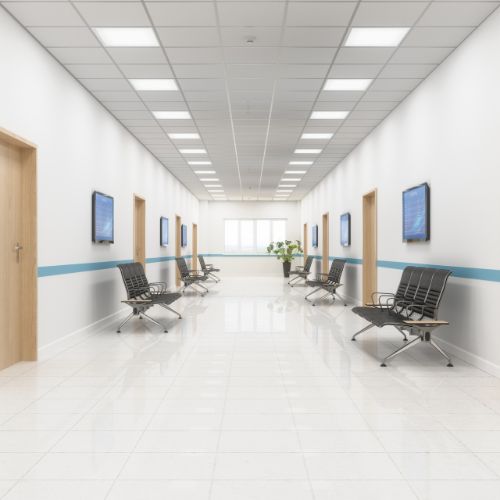
We design lobbies that are peaceful and serene, infused with natural light and greenery to improve mood and well-being.

We design breakthrough facilities that integrate advanced technologies and materials to help streamline medical workflows, improve outcomes, and accelerate the healing process.

We design healing spaces that promote natural healing, such as rooftop gardens, meditation rooms, and green spaces.
I work with a dedicated team of consultants who share my passion and commitment to healthcare architecture and design. Our team includes healthcare planners, laboratory planners, and sustainability experts. Together, we provide a comprehensive and integrated approach to healthcare design tailored to your specific needs and goals.
Our healthcare planners bring expertise from operational aspects of healthcare to support innovative functional planning and design.
Our laboratory planners bring a scientific and technical understanding of laboratory space planning and engineering.
Our sustainability experts bring integrated solutions for energy that are economically, socially, and environmentally responsible.
Feasibility Studies
Architectural Planning & Designing
Interiors
EPC & Construction
Project Management
Equipment Planning
Management Consultancy
Operational Flow Management